
The Coming Backlash
Everyone rushed to publish with AI. Readers noticed, and so did the algorithms.

Two Christmases running, Coca-Cola rebuilt its old "Holidays Are Coming" ad almost entirely with generative AI. The first attempt, in 2024, got called soulless and creepy within hours of going up. McDonald's tried its own AI Christmas spot in 2025 and pulled it within days after people savaged it. The footage in both was clean enough, the production cost was a rounding error next to a real shoot, and the brands had every rational reason to do what they did, but people unanimously hated it anyway. What bothered people had nothing to do with a glitchy hand or an extra finger. The ad felt made by nobody, for nobody, and watching it felt like a small insult.
I keep that example close because it cuts against the advice that so many in marketing took over the last two years. The advice was really simple and it sounded unbeatable. Generative tools let you publish 10x as much for a fraction of the cost, so cover every query, flood every channel, and let sheer volume carry the day. By this year nearly every marketing team was running on these tools. The Content Marketing Institute found 94% of marketers using AI tools daily, and 10Fold reported 91% of communications teams planning to publish even more, nearly half of them chasing 3-5x their old output. The volume arrived, but the payoff didn't. In the same eMarketer reporting, only 6% of B2B marketers said the tools had meaningfully improved their content's performance, and CoSchedule's December 2025 survey found 31% of marketers naming organic search as the channel where they'd lost the most ground after the shift. A lot of companies spent a most of the year working harder to publish more and got nothing back for it.

From my perspective, shooting for more volume in your content strategy is not going to be a bet that pays out very well in the coming months. Those type of volume plays are getting hit from two different directions. The human audience is one, and systems that decide which sources to cite are the other. Both have started to punish the same thing, which happens to be the one thing AI made cheap and abundant. Sameness.
Start with the audience, because the evidence there is clean. Researchers at the Nuremberg Institute for Market Decisions ran an experiment where they showed two groups of people the same ad. The only difference was the caption. One group was told it was a photograph, and the other that it had been generated by AI. Nothing else changed, not a pixel, and the group that thought a machine made it rated the ad lower on appeal, on credibility, and on the feeling it left behind. The caption was the entire intervention. Telling people something was AI-made manufactured a trust issue on the spot.
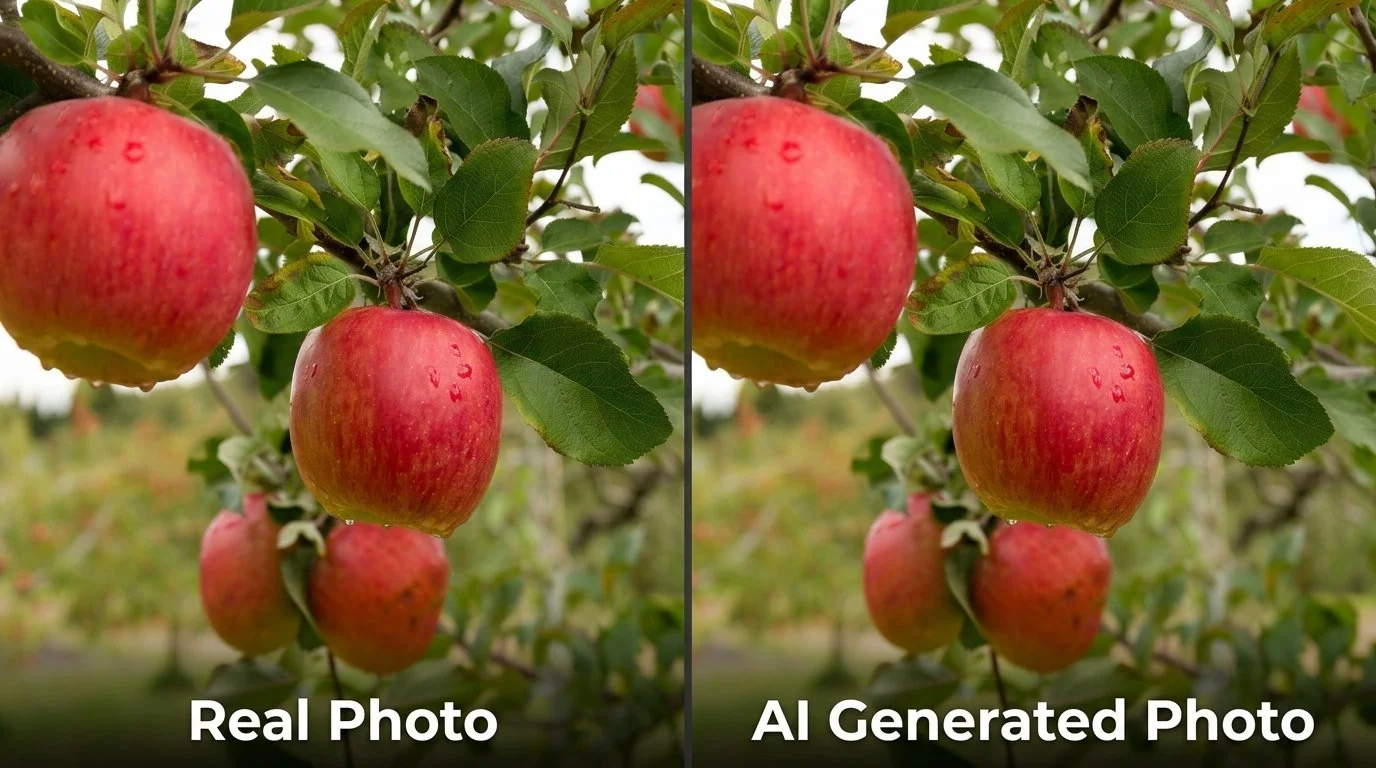
Once you've seen that, the Coke ad makes more sense, and so does a pile of survey data from this year. A National Law Review report counted 54% of Americans as already fatigued by AI, with content that reads as machine-made losing somewhere between a fifth and a third of its engagement against human work. AutoFaceless tracked consumer preference for AI-made creator content sliding to 26% this year, down from 60% as recently as 2023, and found that 52% of people disengage the moment they suspect AI was involved. Suspicion alone is enough to make them click away.

What I find fascinating is that the people producing the content can't feel any of this. In that same data, 73% of marketers were convinced their AI content performed better, while only about a quarter of consumers preferred it. Ipsos has watched US adults' stated preference for human-made work rise steadily from 2023 through 2025. A gap that wide between the maker and the reader usually closes in one direction, and it isn't the maker's. If the audience were the only problem, you could maybe argue your way around it, write the AI copy a little better, sand off the obvious tells. The second front is much harder to wave away, because it's the engines you're trying to get cited by, and they are constantly changing what they reward.
Eighteen months ago the playbook for getting cited by an AI answer was fairly mechanical. Simple stuff like dropping in an FAQ block, or adding an “answer the question” section in the first hundred words, or by adding schema markup, your citations went up. Then everyone read the same blog posts and did the same things, and the engines ended up swimming in millions of pages that were structurally identical and said the same stuff in the same order, over and over again. There's no reason for a model to land on your answer when it’s choosing a source to pull and ten thousand pages are interchangeable with no differentiating content.
What the models reach for instead is specificity, and the research on this is highly concrete. A study from Princeton, Georgia Tech, and IIT Delhi tested nine ways of optimizing a page and found that loading it with real stats, citations, and quotable detail more than doubled how often it got surfaced. ZipTie pulled one move out of the pile by just adding original stats, and it clocked it at a 41% lift by itself. These systems are built to minimize risk, so when they assemble an answer, they'd rather repeat a specific claim with a source attached than paraphrase something generic and hope it holds up. Averi's benchmarks show original research and data-heavy reports getting cited 3-10x more often than an ordinary blog post. Since generic AI output, by its nature, is the most ordinary thing in the index, it's the very first thing the model passes over.
What’s worse for the old playbook, the ground it was built on has started to shift. Ahrefs looked at 863,000 keywords and found that only 38% of the citations in Google's AI Overviews now come from pages ranking in the top ten, down from 76% a year earlier. Across ChatGPT, Gemini, and Copilot, only 12% of the links they cite rank in Google's top ten at all. Most of what the engines quote is coming from a layer that rank-tracking tools were never built to look at. Aiming more volume at the old search results page is firing at a spot the target already left.
There's a deeper reason human writing is about to matter more, and it has nothing to do with anyone's taste. The models doing the citing are running short on the raw material that made them good. The failure mode has a name, model collapse, and the original paper in Nature laid it out plainly: feed a model a steady diet of text generated by other models and its output gets flatter and less varied with every generation, like a photograph of a photograph of a photograph. A February 2026 piece in Communications of the ACM argued this stopped being a worry on a whiteboard and started showing up in shipping products, with image tools drifting toward sameness. The clean material is getting harder to find. Stanford's Internet Observatory, by one 2026 count, flagged 58% of newly published pages as carrying the fingerprints of low-quality AI gen content. The open web is filling with synthetic filler, and that makes original human writing scarcer by the month, where it used to be cheap and everywhere. Scarce things are worth more to the systems that need them, not less. A brand that puts out real, human created research, its own first-party numbers, a real opinion from a person who'll attach their name to it, is doing two useful things at once. It skips the trust penalty the audience hands to anything that smells synthetic, and it feeds the engines the single ingredient they can't conjure on their own.
None of which is an argument for throwing the tools in the trash. Used with a hand on the wheel they still earn their keep; the Presenc numbers show that AI-assisted content with real human editing gets cited about 12% more than purely human writing, while raw, unedited AI output gets cited 34% less. What matters is whether a person with something to say shaped the piece, or whether someone just turned the crank and shipped the draft.
If I were spending my next year on this, I'd stop counting how much I published and start asking what only I could publish. Survey your own customers. Go dig through your own data for the small study nobody else has bothered to run, because original numbers are the closest thing to a guaranteed citation that exists right now, and there isn’t a model that can create yours without your data. Put a real name on the byline, since the engines and the readers both want to know who's talking and why they should listen, and the anonymous house-style "content team" attribution is starting to read as a tell. Let the AI do the scaffolding and the dull first pass, and keep the judgment and the stories and the willingness to say something a competitor wouldn't. Every so often, read your last twenty posts back to back. If you could swap your logo for a rival's and not a word would feel out of place, you've built exactly the interchangeable inventory the machines have no reason to ever cite.
The question I spend so much of my working life now on is why an AI will recommend one brand and skip past another when both, on paper, answer the question equally well. The answer keeps turning out to be the same. It reaches for the source that sounds like a particular person who knows a particular thing, and it walks past the one that sounds like everything else it has already read. We spent two years teaching the whole internet to sound the same. Get back to basics, be a human, and create content for other humans. We’re all in this thing together.

Jarred Smith is the author of Explainable: Why AI Recommends Some Brands & Ignores Others, an Amazon bestseller on AEO, GEO, and SEO. He's a marketing leader with nearly 20 years of experience across healthcare, public media, retail, and environmental services. Find him at jarredsmith.com.