Microsoft Just Showed Us How AI Cites Our Content, and the Data Is Brutal
Something happened this week that I think deserves a lot more attention than it's getting. On March 23, Microsoft expanded its AI Performance dashboard in Bing Webmaster Tools with a feature that connects grounding queries directly to the specific pages being cited in AI-generated answers. For the first time, you can click on an AI query and see exactly which of your URLs got pulled into the response, or click on a page and see which AI queries are citing it.
That probably sounds like a minor product update if you're not paying close attention to the AI search space. But it's actually a significant moment for anyone trying to understand how AI decides which brands to recommend and which to ignore. Because up until now, the relationship between your content and AI-generated answers has been almost entirely opaque. You could see that AI referral traffic was showing up in your analytics, but you couldn't trace the connection back to specific queries or specific pages with any real precision. Microsoft just turned the lights on in a room we've all been stumbling around in.
And what the light reveals is both encouraging and uncomfortable.
What Bing's AI Performance Dashboard Actually Shows You
Microsoft originally launched the AI Performance dashboard in public preview on February 10, and even in its initial form it was groundbreaking. It was the first tool from any major search platform that let publishers see how often their content gets cited in AI-generated answers. Not impressions, not clicks; citations. How many times your pages are referenced as sources when AI systems build their responses across Copilot, Bing AI summaries, and partner integrations.
The original version gave you four core metrics: total citations, average cited pages per day, grounding queries (the phrases AI used to retrieve your content), and page-level citation activity. That alone was more transparency than Google has offered with Search Console, which still lumps AI Overviews data into its standard performance reporting without a dedicated dashboard.
The March 23 update adds the connection layer that was missing. You can now click on a grounding query to see which pages are being cited for that query, or click on a page to see which queries are driving citations to it. The mapping is many-to-many, which means one query can cite multiple pages and one page can be cited across many different queries. According to Krishna Madhavan, the Principal Product Manager at Microsoft AI and Bing, this was the single most-requested feature since the dashboard launched.
The reason this matters goes beyond Bing's market share. Microsoft's grounding technology powers nearly every major AI assistant on the market right now. That means the citation patterns you see in this dashboard aren't just about Bing; they're a window into how AI retrieval systems in general are evaluating your content.
The Visibility Problem the Data Reveals

Having access to this data is a big step forward. But the broader research on AI citation patterns tells a story that most brands aren't going to love.
AirOps and growth strategist Kevin Indig published their 2026 State of AI Search report earlier this year, and one finding keeps coming back to me: only 30% of brands stay visible from one AI answer to the next. Run the same query five times, and just 20% of brands remain present across all five answers. That level of volatility makes any single snapshot almost meaningless, which is exactly why the trend-over-time capability in Microsoft's dashboard is so valuable. You need the longitudinal view because individual data points are noise.
The freshness factor is equally striking. Pages that go more than three months without an update are 3x more likely to lose their AI citations. Over 70% of all pages cited by AI models have been updated within the past 12 months. Content that used to sit comfortably in the rankings for years now has a shelf life measured in weeks when it comes to AI visibility. The models are constantly looking for something newer, and if your competitor publishes a fresher version of the same answer, your citation gets swapped out.
And then there's the third-party problem. About 48% of AI citations come from community platforms like Reddit and YouTube, and 85% of brand mentions in AI answers originate from third-party pages rather than owned domains. ChatGPT only cites 15% of the pages it retrieves during a search; the other 85% of sources get reviewed and rejected. So even being in the retrieval pool doesn't guarantee you'll make it into the answer.
AI Overviews now feature only about 23% as many URLs as traditional search results, according to the AirOps research. That's a massive contraction in digital shelf space. For two decades, a brand could compete by creating better content for a specific query and earning one of ten organic spots. Now it needs to compete for one of two or three citation slots within a synthesized AI answer, and those slots reshuffle constantly.
The Citation-to-Conversion Paradox
Here's what makes this whole situation so hard to navigate strategically. The visibility is volatile, the shelf space is shrinking, and the measurement tools are still catching up. But the traffic that does come through converts at rates that are hard to dismiss.
Seer Interactive's data shows that brands cited inside AI Overviews earn 35% more organic clicks and 91% more paid clicks than brands that aren't cited, even when both are ranking on similar keywords. The citation itself acts as a trust signal that compounds into downstream behavior. And AI-referred visitors convert at 4.4x the rate of organic search visitors overall, with ChatGPT referral traffic converting at 15.9% compared to Google organic at 1.76%.

So we're looking at a channel that's small in volume, wildly inconsistent in delivery, and almost impossible to benchmark reliably; yet the visitors it sends are the most valuable traffic most brands have ever seen. That's not a channel you can ignore, and it's not a channel you can optimize with the same playbook you've been running for a decade.
The Conductor 2026 AEO/GEO Benchmarks Report, which analyzed 3.3 billion sessions across more than 13,000 enterprise domains, found that AI referral traffic accounts for just 1.08% of total website traffic on average. But that 1% converts at twice the rate of traditional organic in one-third the number of sessions. The math on return per visit is staggering even if the absolute numbers are small.
Google's Transparency Gap Is Becoming a Strategic Liability
It's worth pausing on the competitive dynamic between Google and Microsoft here, because it matters for how the whole AEO/GEO ecosystem develops.
Microsoft has now shipped a dedicated AI citation dashboard with query-to-page mapping, grounding query visibility, and citation trend tracking. Google Search Console still bundles AI Overviews data into its standard performance reporting and assigns all AI Overview links to a single position without distinguishing which URLs actually get cited. You can't see grounding queries. You can't see citation trends. You can't map queries to cited pages. For a company that generates over a billion AI Overview impressions daily across 200+ countries, the lack of publisher-facing citation data is becoming difficult to justify.
This matters because Google AI Overviews and AI Mode together represent the largest AI search surface in the world by a significant margin. ChatGPT gets the headlines, but Google processes orders of magnitude more queries. If you're a brand trying to understand your AI visibility, the platform where you have the most data is also the one where you have the least visibility. And that's before you factor in the personalization layer from Google's Personal Intelligence rollout on March 17, which makes the tracking gap even wider.
The irony isn't lost on the industry. The SEO community's reaction to Bing's dashboard launch was telling; multiple prominent voices noted on social media that Bing Webmaster Tools has consistently been more useful and transparent than Google Search Console when it comes to new search paradigms. Aleyda Solis called it the first official AI search visibility tool. Koray Tugberk Gubur noted that Microsoft has proven its commitment to transparency once again. Wil Reynolds from Seer Interactive immediately started analyzing the grounding query data for client insights.
Google may eventually ship comparable tooling, but right now, Microsoft is defining the standard for what AI citation transparency looks like. That's a meaningful advantage for publishers and brands who use Bing Webmaster Tools as a proxy for understanding broader AI retrieval behavior.

What This Means for Your Content Strategy
The combination of Microsoft's new data and the broader research on citation patterns points to a few things that I think every marketing team should be acting on right now.
Get into Bing Webmaster Tools if you aren't already. This might sound obvious, but most marketing teams have treated Bing as an afterthought for years. That calculation has changed. The AI Performance dashboard is free, it's live right now, and it gives you citation data that Google isn't providing. Verify your site, pull up the AI Performance report, and start establishing a baseline for your citation activity. You can't optimize what you can't see, and right now Microsoft is the only major platform showing you anything.
Build a content freshness program, not just a content calendar. The 3x citation loss for pages older than three months isn't a stat you can afford to ignore. This doesn't mean publishing new content every week just for the sake of velocity; it means systematically reviewing and updating your highest-value pages on a quarterly cycle at minimum. Add new data, refresh examples, update dates and references. The AirOps research shows that AI models treat recency as a primary trust signal, so a great page from 2024 is losing to a decent page from last month.
Structure content for extraction, not just readability. We already know that 44% of LLM citations pull from the first 30% of content. Pages with sequential headings and rich schema markup show 2.8x higher citation rates. Definition-lead sentences at the start of sections increase extraction probability by 2.8x. AI models need clean, self-contained answers they can pull out and present in their responses. If your page is a wall of unstructured prose, the model will skip you for a competitor whose content is easier to parse, even if yours is technically better.
Invest in your third-party ecosystem with the same seriousness as your owned content. When 85% of brand mentions come from third-party pages and 48% of citations come from community platforms, your PR strategy, your review presence, your Reddit engagement, your YouTube content, and your industry publication placements aren't supporting activities. They're the primary input layer for AI visibility. SE Ranking's research found that domains with profiles on platforms like Trustpilot, G2, and Capterra have 3x higher chances of being cited by ChatGPT. Domains with significant presence on Reddit and Quora have roughly 4x higher citation rates. You're not going to earn AI visibility by optimizing your own website alone.
Track citation patterns as a leading indicator, not a vanity metric. The Bing dashboard shows citation trends over time, and that trend line matters more than any single data point. A page that's gaining citations week over week is telling you something about how AI retrieval systems value that content. A page that's losing citations is giving you an early warning to refresh before the traffic impact shows up in your analytics. Treat citation data the way you'd treat impression data in traditional SEO: it's the leading indicator that precedes the clicks.
The Measurement Era of AI Search Just Started
We've been in the speculation era of AI search visibility for the past two years. Everyone had opinions about what mattered, but the data was thin and the tools were immature. Microsoft's AI Performance dashboard doesn't solve every measurement problem, but it moves us from speculation to observation in a way that nothing else has.
The brands that will benefit most from this moment are the ones that start building their baseline now, while most of their competitors are still treating AI citation tracking as something they'll get around to eventually. The data is there. The patterns are clear enough to act on. Content freshness, structural extractability, and third-party credibility are the three levers that move AI visibility, and for the first time we have a free, first-party tool to watch them in action.
In Explainable, I wrote about the gap between understanding why AI recommends certain brands and actually being able to do something about it. That gap is closing, one dashboard at a time.
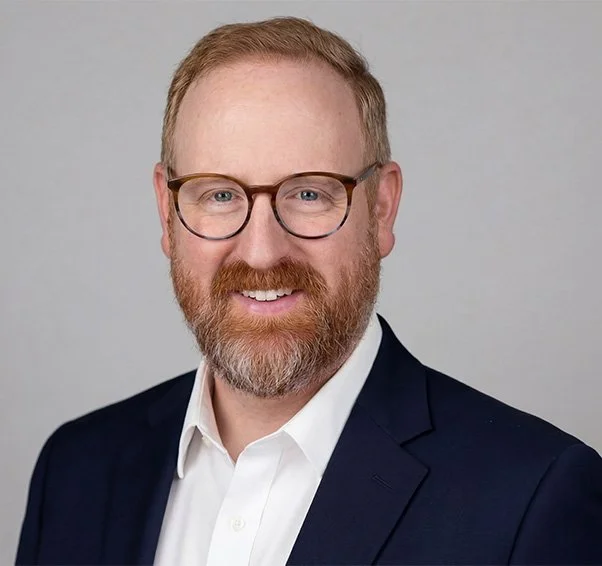
Jarred Smith is the author of Explainable: Why AI Recommends Some Brands & Ignores Others, an Amazon bestseller on AEO, GEO, and SEO. He's a marketing leader with nearly 20 years of experience across healthcare, public media, retail, and environmental services. Find him at jarredsmith.com.