What Adobe's New ASO Acronym Means And What It Doesn't
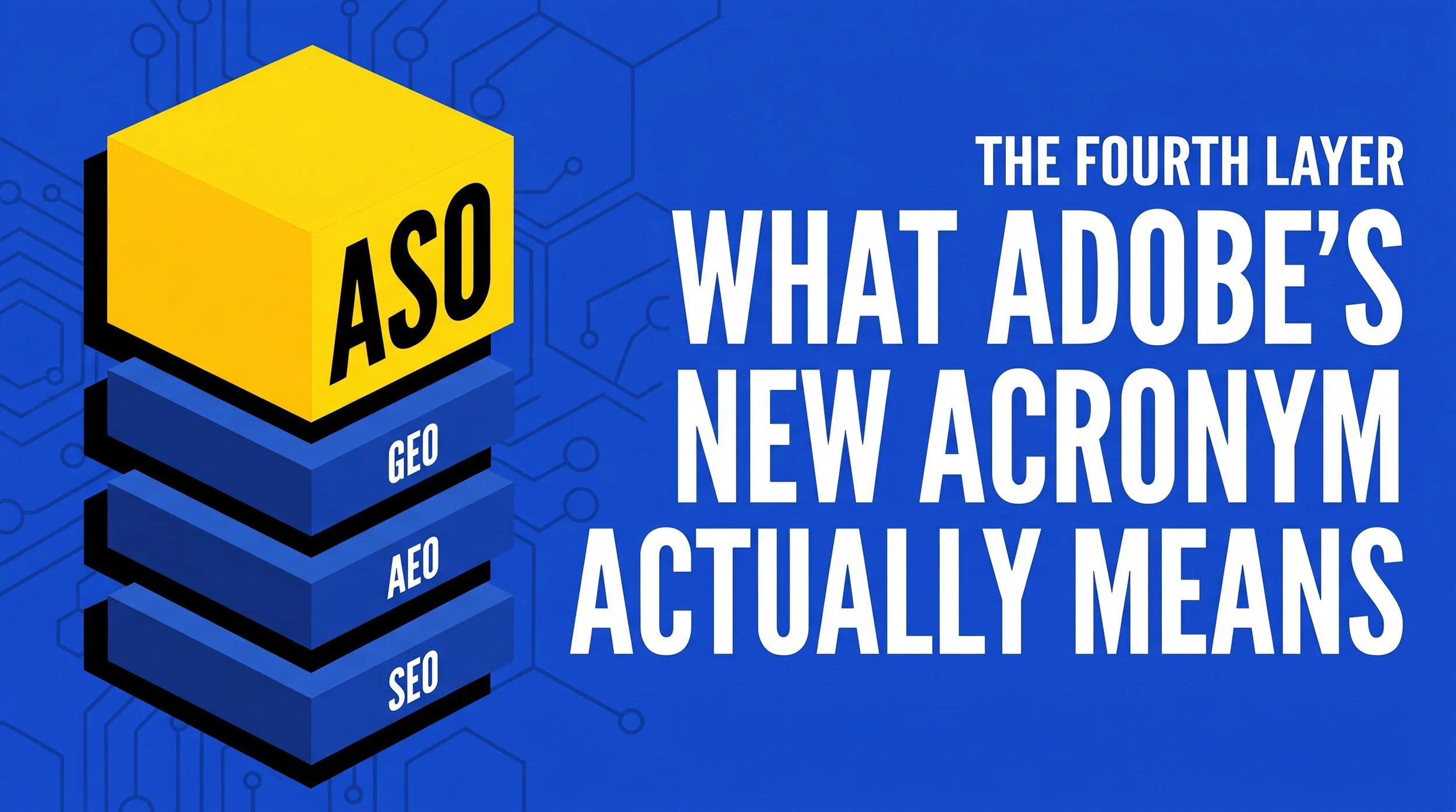
Adobe closed its Semrush acquisition on April 28, and along with the press release came a new three-letter addition to the optimization vocabulary: ASO, or agentic search optimization. The term sits next to SEO and GEO in Adobe's framing, with the argument being that marketers now have to think about three concentric problems instead of two.
I've been reading the announcement, the Summit keynote materials from a week earlier, and the analyst takes, and I want to talk about what's new here, what isn't, and why the term matters more than the technology behind it.
The numbers Adobe is using to justify the term
Start with the data, because the data is the part that's hard to argue with. Adobe's own analytics show AI traffic to U.S. retail sites jumped 269% year over year in March 2026. A separate read from Adobe's Loni Stark, talking to Marketing Brew, put the Q1 number at 393%. Either way, traffic from AI surfaces is no longer a rounding error.
What's more interesting than the volume is what Stark said about the conversion rate; her team is finding that traffic referred from LLMs converts higher and is worth more than average traffic. That's the part marketers should sit with for a minute, because it changes the math on whether AI visibility is a vanity metric or a pipeline metric.
So, the urgency is real, but the question is whether ASO is a meaningfully different discipline from GEO, or whether Adobe has just put a label on the next phase of the same problem.
What changed between GEO yesterday and ASO today
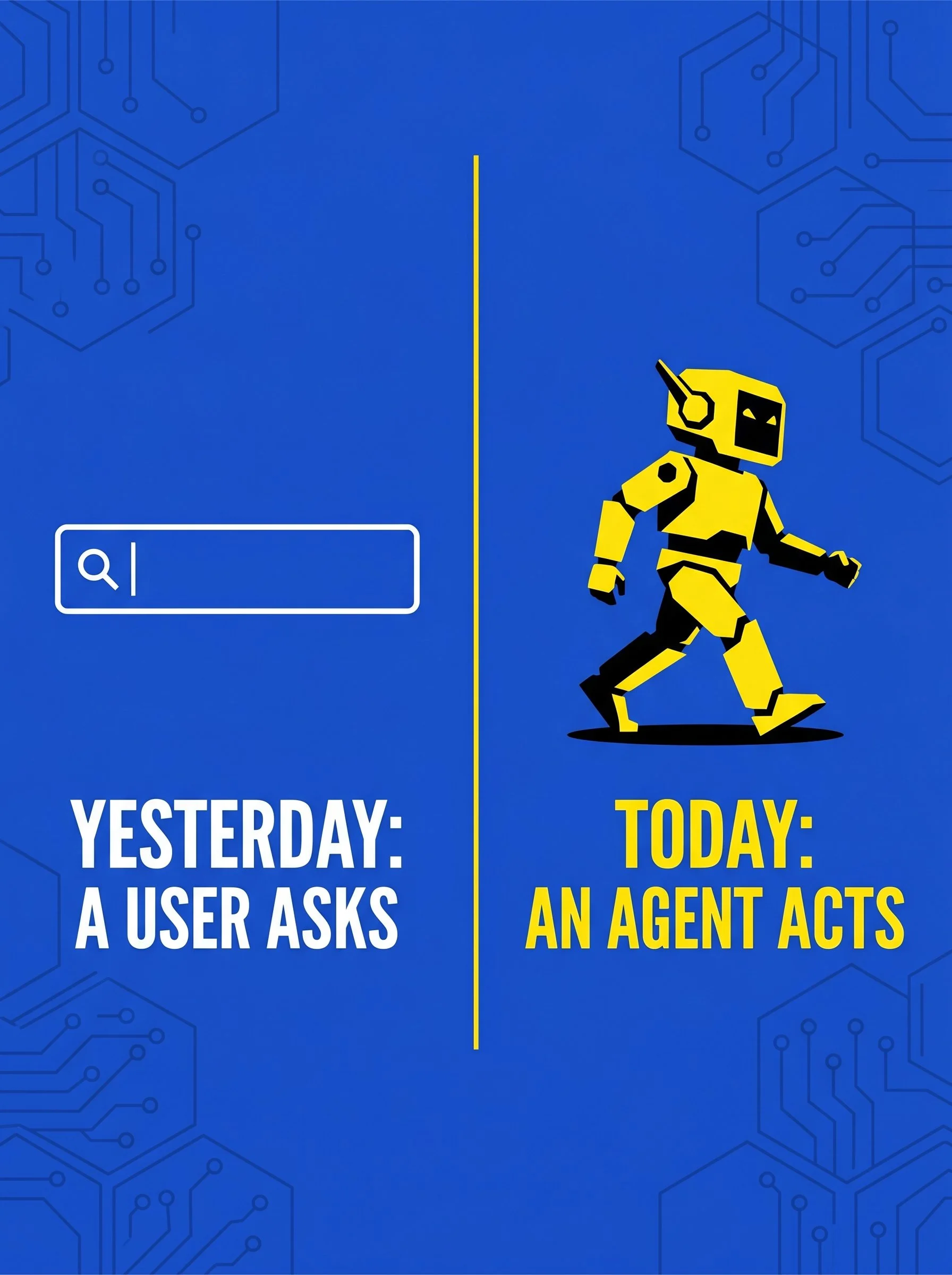
A year ago, the conversation was about generative engine optimization. The mental model was reasonably simple. It went something like this… Someone asks ChatGPT or Perplexity a question, the model generates an answer, and your brand either gets cited in that answer or it doesn't. You optimize for citation, and you earn mentions on authoritative third-party sources. You make sure your own site has clean, parseable content with the right schema and then you watch your share of voice across the major AI surfaces and try to nudge it up.
None of that works goes away with this acronym. You still put essentially are putting in the same work.
What's different now is the next layer up. The agent does more than answer a question because it acts on behalf of the user, comparing five vendors and shortlisting a few, pulling product data, checking availability, and in some cases initiating a transaction, which seems a little frightening to me, but you do you. Adobe's Brand Concierge updates literally bring real-time product details and checkout into the conversation. Their LLM Apps capability lets brands build experiences that run inside LLM interfaces directly. The agent in this case is the one reading the answers, not the user.
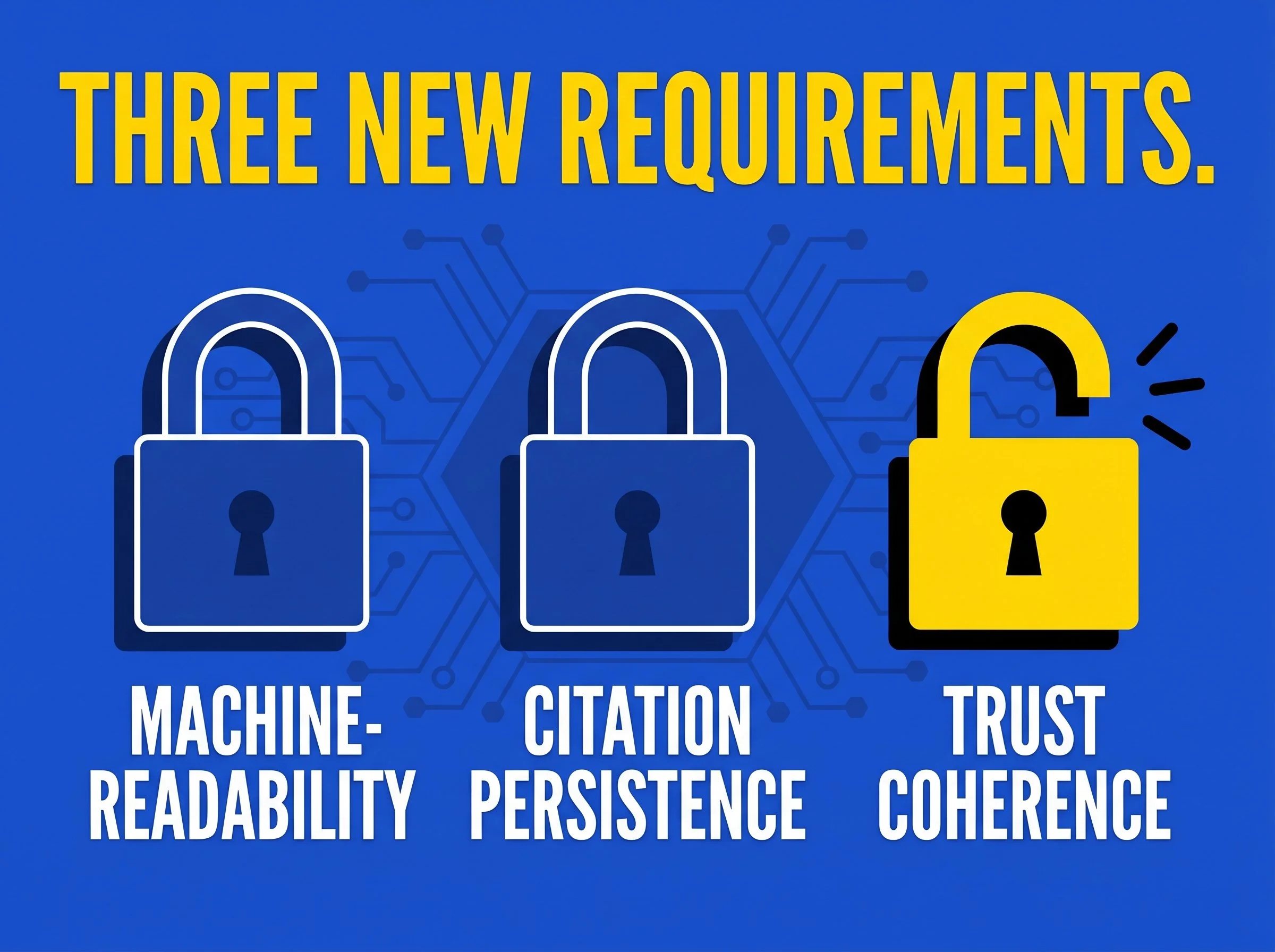
That changes what visibility means in three concrete ways:
Machine-readability stops being a nice-to-have and starts being the price of admission. If an agent can't parse your product catalog, your service offerings, your pricing, or your availability through structured data or an API, you're functionally invisible at the moment of decision. Adobe Commerce updates explicitly call out catalog enrichment and product page optimization for AI-driven shopping journeys.
Citation persistence matters more than citation frequency. An agent doing a comparison task isn't going to cite forty sources; it's going to anchor on a few it trusts and reason from there. Showing up once in a generated answer is one thing, but being one of the three brands an agent consistently anchors to when reasoning through a category is something else entirely, and it's a much smaller club. Hopefully your brand gets past the bouncer.
The trust signals shift. Loni Stark made the point in her Summit announcement that AI is a new kind of intermediary because it can reason. Reasoning models weight different signals than ranking algorithms do. They care more about coherence across surfaces, more about whether your brand says the same thing in the same way in ten different places, and less about backlink count and keyword density.
What ASO is, in plain English
If GEO is "make sure the LLM cites you in its answer," ASO is "make sure the agent picks you when it's choosing on the user's behalf." That's the cleanest way I can frame it without falling into Adobe's marketing copy.
It includes everything GEO already covered, plus a layer focused on whether your brand is structurally accessible to autonomous systems. Schema, yes. Structured product data, yes. Machine-readable trust signals, yes. But also, increasingly, things like Model Context Protocol endpoints, which let agents pull from your systems directly. Adobe's Stark told Marketing Brew that MCP adoption among brands has been strong, while agent-to-agent protocols like ACP are seeing slower uptake.
What's hype, and what's signal
Adobe's framing is going to push the term hard over the next few months, and a lot of the coverage will be breathless. So a few things worth filing under "not yet."
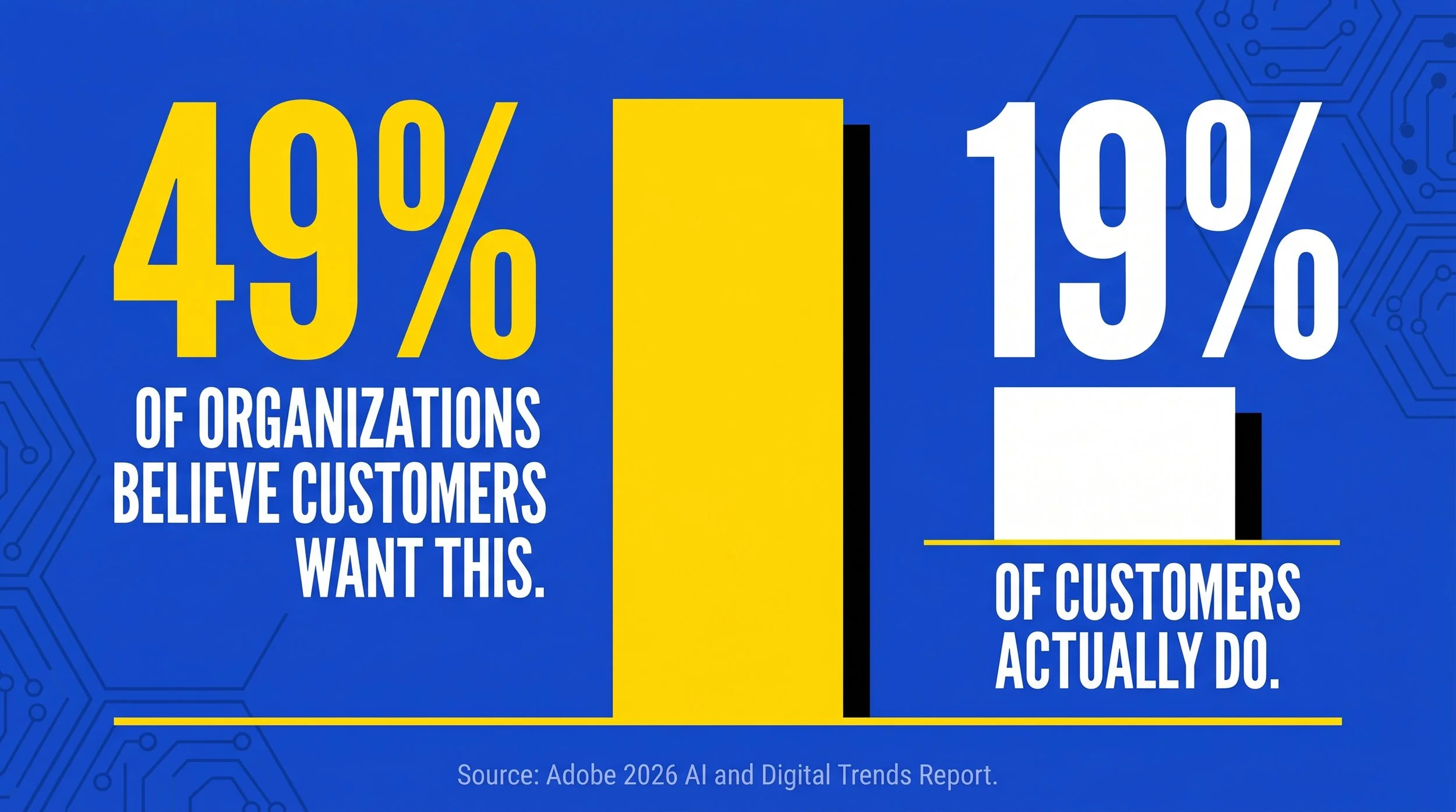
Customer comfort with agents is well behind organizational ambition. Adobe's own 2026 AI and Digital Trends report, which surveyed 4,000 customers and 3,000 executives, found that 49% of organizations believe customers will eventually want AI agents as their primary way of interacting with brands, but only 19% of customers want that future. Forty-three percent of customers would try a brand's AI concierge if offered, but most of them are still in "curious" rather than "committed" mode.
That gap matters because it tells you ASO is a long-horizon discipline. Brands that show up well across agent surfaces this year are positioning for a buying behavior that's still arriving, not one that's already arrived.
The other thing worth flagging is that not every agent protocol is going to win. Stark explicitly noted that Adobe is selectively adopting the parts of Google's Universal Commerce Protocol that focus on product discovery, but holding off on the transactional pieces until adoption catches up. If Adobe is hedging, you can hedge too. Don't rebuild your stack around a protocol that hasn't proven it'll be the standard.
Where this leaves the practitioner
If you've been doing the GEO work, you're closer to ASO-ready than you think. The disciplines are continuous. Entity clarity, schema implementation, off-site citation building, and content coherence across surfaces all carry forward. You're not throwing anything out.
What you should add to the list, in rough order of difficulty:
A clean, structured product or service catalog that an agent can parse without guessing. If you sell services, that means proper Service schema, clear pricing or pricing logic, and consistent descriptions across your site, your profiles, and any third-party directories. If you sell products, it means catalog completeness and consistency at a level most B2B sites haven't bothered with.
Tracking that goes beyond citation count. You want to know how often you show up in AI-generated answers, sure, and you also want to know whether you're in the consideration set when an agent is comparing options. Tools for this are still maturing; Adobe's LLM Optimizer is one approach, Conductor and Siteimprove have announced their own offerings, and Semrush now sits inside Adobe doing the same. The market will sort itself out over the next year.
A point of view on MCP. Whether you build endpoints or not is a strategic question, not a tactical one, but you should at least know whether your category has any early movers experimenting with it.
And the obvious one that everyone forgets: a coherent brand story that says the same thing in the same way across every surface a reasoning model can reach. The book I wrote on this argues that AI models recommend brands they can describe confidently and ignore brands they can't, and the difference between the two often comes down to whether the brand is telling a consistent story across enough surfaces that a model has something to anchor on. ASO is just raising the stakes.
The short version
ASO is a useful term that describes a real shift, but it's a shift in degree more than in kind. Adobe putting its weight behind the acronym matters because it'll standardize how enterprise marketers talk about the work, and standardized vocabulary is how disciplines get budget. If you've been investing in GEO, keep going. If you haven't, now would be a reasonable time to start, because the gap between brands that are agent-ready and brands that aren't is going to widen faster than most people expect.
The 269% number isn't going down.
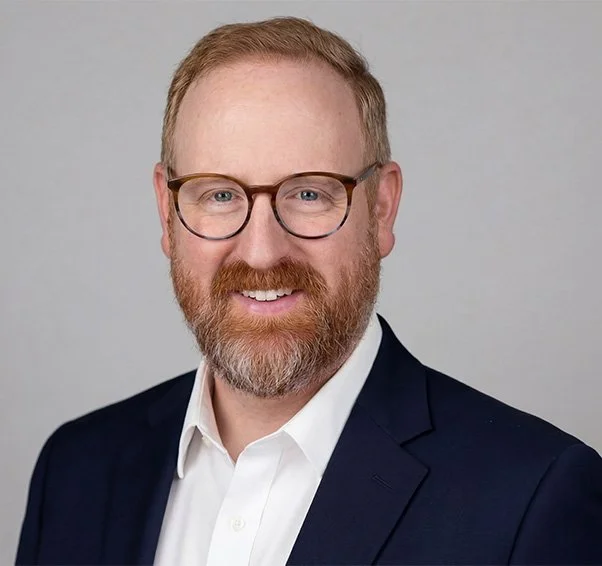
Jarred Smith is the author of Explainable: Why AI Recommends Some Brands & Ignores Others, an Amazon bestseller on AEO, GEO, and SEO. He's a marketing leader with nearly 20 years of experience across healthcare, public media, retail, and environmental services. Find him at jarredsmith.com.