
The 30% Problem: Why Most Brands Are Invisible to AI Search in 2026 and What the Data Says You Should Do About It
Here's a number that should stop every marketer mid-scroll: only 30% of brands that appear in an AI-generated answer show up again in the very next response to the same query. Run that same query five times in a row, and just 20% of brands persist across all five. That's according to the 2026 State of AI Search report from AirOps and Kevin Indig, which analyzed citation patterns across Google AI Overviews, ChatGPT, Perplexity, and other AI platforms over the past year.
Think about what that means for a moment. You could be doing everything right by traditional SEO standards, ranking on page one for your target keywords, updating your content calendar, building backlinks, and still be functionally invisible to a growing share of your audience. Because AI search doesn't work like a results page. There's no stable position one. There's no predictable rank drop. There's a rotating cast of cited sources that shifts every time a model regenerates its response, and if your brand isn't structurally built to keep getting pulled back in, you're not just losing a ranking; you're losing the conversation entirely.
We're not talking about a speculative future here. Google AI Overviews now appear in roughly 25% of all Google searches, up from about 13% in March 2025, according to Conductor's analysis of 21.9 million queries. ChatGPT processes around a billion queries a day and accounts for roughly 87% of all AI referral traffic to websites. Google's AI Mode, which launched to all U.S. users last year, runs on Gemini 2.5 and uses a query fan-out technique that issues dozens of parallel searches simultaneously before synthesizing a single response. As of late March 2026, Google expanded Search Live globally, bringing voice-and-camera AI search to over 200 countries.
This isn't a trend to monitor. It's the present tense of how people find brands, evaluate options, and make decisions.
The Gartner Prediction We Can Finally Fact-Check
Back in February 2024, Gartner predicted that traditional search engine volume would drop 25% by 2026, with AI chatbots and virtual agents eating into search marketing's share. A lot of people, myself included, thought that number felt aggressive. Two years later, the data suggests Gartner was directionally right even if the exact percentage is still being debated.
The zero-click rate across Google searches has reached 58.5%, according to SparkToro's research. When users interact specifically with Google's AI Mode, that number climbs to a staggering 93%, per Semrush. Organic click-through rates drop by 61% on average when AI Overviews appear. And Gartner's own follow-up research projects that organic search traffic could decline more than 50% by 2028.
The structural shift is real. What's changed isn't just how many people click; it's where the discovery happens. AI referral traffic from platforms like ChatGPT grew 527% between January and May 2025, according to Adobe Digital Insights. Perplexity has crossed 45 million monthly active users. Google Lens now handles searches from 1.5 billion users monthly. The entry points have multiplied, but they've also consolidated around platforms that synthesize and cite rather than rank and list.
Welcome to the Citation Economy
Here's the fundamental shift that I think most marketing teams still haven't fully internalized: in AI search, you're either cited or you're invisible. There is no position seven. There's no second page to scroll to. AI systems cite between three and five sources per query on average, and the brands that make it into that short list capture a disproportionate share of the traffic and trust that follows.
The AirOps data paints a vivid picture of what it takes to stay in that rotation. Content that hasn't been updated in the last quarter is 3x more likely to lose its citations. Pages with sequential headings and rich schema markup see 2.8x higher citation rates. And here's the kicker: roughly 60% of AI Overview citations come from URLs that don't even rank in the top 20 organic results. The old playbook of chasing rankings as a proxy for visibility has a serious blind spot.
SE Ranking's November 2025 study found that domains with more than 32,000 referring domains are 3.5x more likely to be cited by ChatGPT than those with fewer than 200. Domains with strong presences on platforms like Trustpilot, G2, Capterra, and Yelp have 3x higher citation rates. And brands with heavy activity on Reddit and Quora see roughly 4x higher chances of being surfaced. The citation economy isn't just about your website anymore; it's about the entire ecosystem of signals your brand generates across the web.
The Platform Fragmentation Problem
One of the most underreported aspects of AI search in 2026 is how wildly inconsistent citation behavior is across platforms. Superlines' March 2026 data found that the same brand can see citation volumes differ by up to 615x between different AI engines. A brand that ChatGPT loves might be completely absent from Claude's responses, and vice versa.
The market share numbers tell the story of fragmentation. ChatGPT holds somewhere between 60% and 80% of the AI chatbot market depending on whose data you trust, with Similarweb pegging it at 68% in January 2026, down from 87.2% a year earlier. Google Gemini has surged to around 18% market share. Perplexity, Claude, and Grok are all growing their slices. Fortune reported in February 2026 that ChatGPT's mobile app market share fell from 69.1% to 45.3% year-over-year, while Gemini climbed from 14.7% to 25.2% and Grok rocketed from 1.6% to 15.2%.
For marketers, this means that optimizing for a single AI platform is the equivalent of only doing SEO for Bing. You might capture some traffic, but you're leaving most of the opportunity on the table. The brands winning in AI search are the ones treating multi-platform visibility as a core competency, not an afterthought.
Freshness Isn't a Nice-to-Have; It's the Price of Admission
The GenOptima AI Brand Visibility Report from March 2026 documented something that should reshape how content teams think about their publishing cadence: newly published content can begin generating AI citations within three to five days, but citation performance typically starts declining after four to five days without updates. That pattern held across all six major AI platforms they tracked.
This is a fundamentally different rhythm than traditional SEO, where a well-optimized evergreen post might hold its rankings for months or even years with minimal updates. In the citation economy, content freshness decays rapidly, and the most visible brands in competitive categories are publishing two or more structured content pieces per week.
ChatGPT's own citation behavior reinforces this. According to Growth Memo's February 2026 analysis, ChatGPT is more likely to cite content that uses definite rather than vague language, contains question marks, has high entity density, balances facts with opinions, and uses simple writing structures. Seer Interactive found that ChatGPT's listicle citations dropped 30% between December 2025 and January 2026, suggesting the model is actively shifting what types of content it prefers to surface.
What to Actually Do About All of This
I've spent the last year and a half researching and writing about the intersection of AI visibility, answer engine optimization, and traditional SEO. The frameworks I laid out in Explainable were built for exactly this moment, and the 2026 data validates the core thesis: the brands that AI recommends are the ones that make themselves structurally easy to understand, trust, and cite. Here's what the data says you should prioritize right now.
Audit your AI visibility across multiple platforms. Don't just check Google. Run your core queries through ChatGPT, Perplexity, Claude, and Gemini. Document where you show up, where competitors show up instead, and where nobody gets cited. This baseline tells you where your blind spots are. Tools like Superlines and Semrush's AI Visibility Toolkit can automate this, but you can start manually in 30 minutes.
Structure your content for extraction, not just consumption. AI systems cite pages that answer questions clearly in one or two sentences, use sequential headings, include specific data points, and implement proper schema markup. The Princeton GEO study by Aggarwal et al. demonstrated that GEO-optimized content achieves up to 40% higher visibility in AI-generated responses. That's not a marginal improvement; it's the difference between being visible and being invisible.
Treat freshness as a publishing strategy, not a maintenance task. If your highest-value pages haven't been updated in the last 90 days, they're 3x more likely to lose their AI citations. Build a quarterly refresh cycle into your content calendar and prioritize the pages that drive the most AI visibility, not just the most organic traffic.
Build your off-site signal ecosystem. About 48% of AI citations come from community platforms like Reddit and YouTube, and 85% of brand mentions in AI responses originate from third-party pages rather than owned domains. Your website is necessary but not sufficient. Invest in reviews, forum participation, earned media, and third-party listicle placements. The brands that earn both direct mentions and formal citations show 40% higher likelihood of persisting across AI responses.
Monitor the metrics that actually matter now. Track citations, mentions, and share of voice in AI responses alongside your traditional traffic and conversion metrics. When your brand is cited in an AI Overview, Seer Interactive found that organic CTR is actually 35% higher. The brands being cited aren't losing clicks; they're getting better ones. The metric that matters most right now isn't position one. It's whether AI systems trust your brand enough to recommend it.
If the engines are describing your brand inaccurately, or leaving you out, and you want help working out why and fixing it, that's what my consulting work covers.
The Window Is Open, but It Won't Stay That Way
OpenAI's CFO has confirmed that ads are coming to ChatGPT. Google is already testing sponsored placements within AI Mode. The window for establishing organic AI visibility before paid placements crowd the field is narrowing. The GEO market is projected to grow from $848 million to $33.7 billion by 2034, and 54% of U.S. marketers already plan to implement GEO strategies within the next three to six months.
The brands that build their citation infrastructure now, the content structure, the off-site signals, the freshness cadence, the multi-platform monitoring, are the ones that will have compounding advantages as these systems mature. AI engines reinforce their own citations; once a brand becomes established as an authoritative source, it tends to be cited more frequently, creating a virtuous cycle that's increasingly difficult for competitors to break into.
I wrote Explainable because I believed the shift from rankings to recommendations was going to redefine brand visibility. The 2026 data doesn't just confirm that thesis; it shows the shift is happening faster and more dramatically than even the aggressive predictions suggested. The question for every marketer reading this isn't whether AI search matters. It's whether you'll be visible when it does.
About the Author
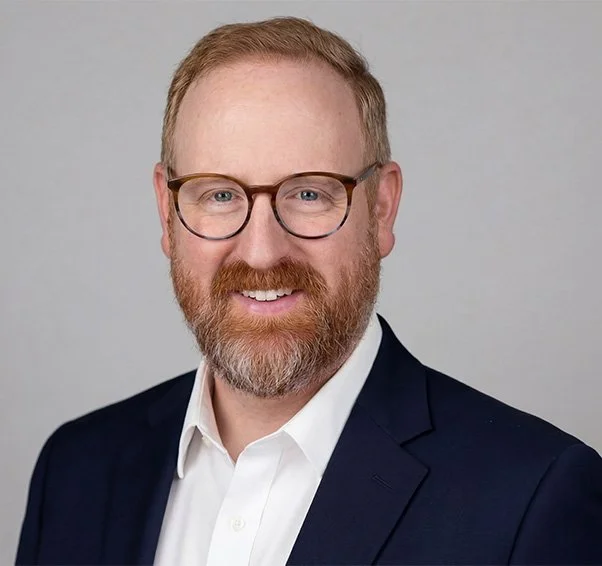
Jarred Smith is the author of Explainable: Why AI Recommends Some Brands & Ignores Others, an Amazon bestseller on AEO, GEO, and SEO. He's a marketing leader with nearly 20 years of experience across healthcare, public media, retail, and environmental services. Find him at jarredsmith.com.