
Stop Measuring AI Search With the Wrong Ruler

There's a belief circulating in AEO/GEO conversation right now that I think is quietly misleading a lot of smart marketing teams. The belief goes something like this: AI search visibility matters because it drives traffic to your site. So the way you know if your AEO/GEO work is paying off is by watching AI referral traffic climb in your analytics.
It sounds reasonable, and it's how most of us learned to measure SEO, but it's also wrong in a way that's going to cost teams the next 18 months if they don't snap out of it.
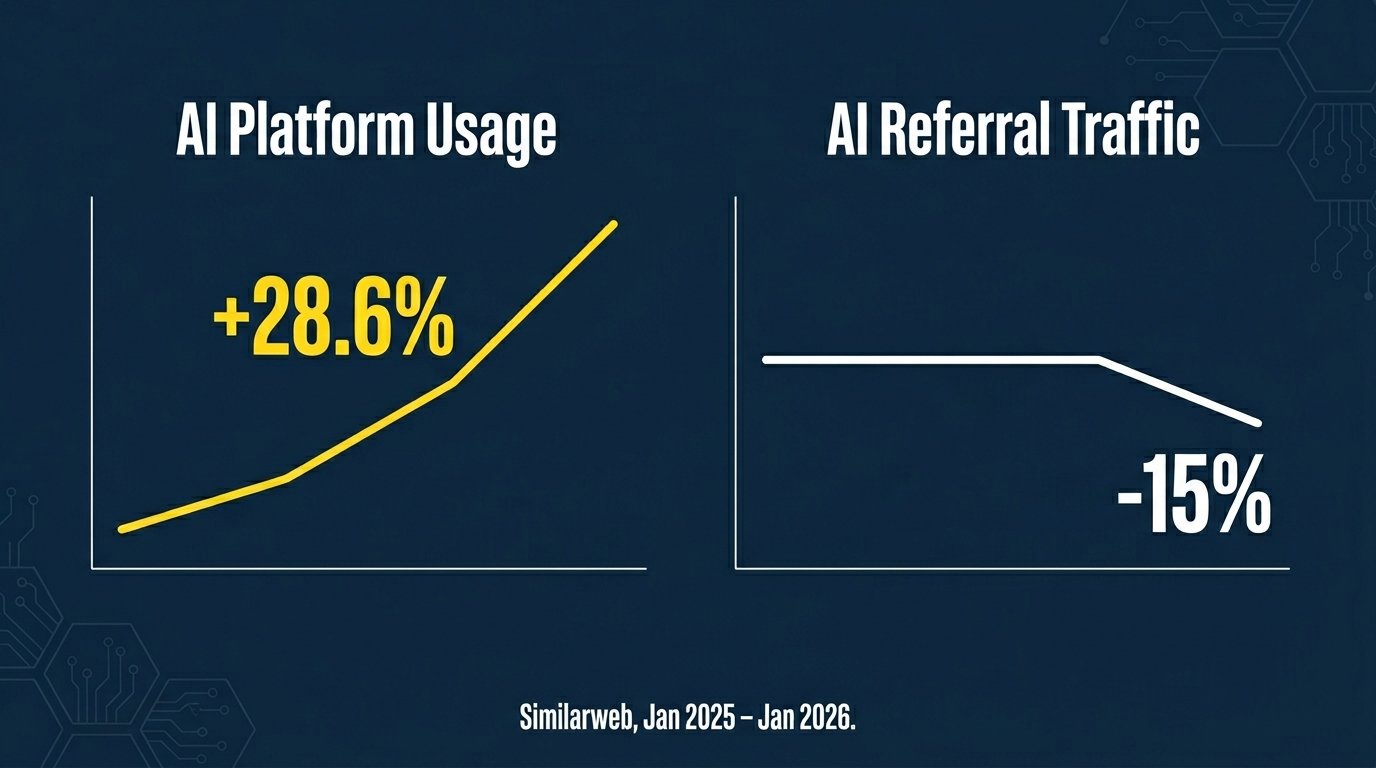
The data came in, and it said something uncomfortable. The teams who are winning AI search aren't seeing meaningful referral traffic from it, and the teams obsessing over AI referral traffic are measuring a metric that's actively declining. Similarweb's 2026 Generative AI Brand Visibility Index found that AI platform visits grew 28.6% between January 2025 and January 2026, while referral traffic from those same platforms to external sites stayed flat over the same period. In absolute terms it's worse than flat. DataReportal's analysis of the Similarweb numbers shows GenAI platforms referred 226.8 million US visitors to third-party sites in January 2026, down from 267.4 million in October 2025, a 15% drop in three months. The referral rate, meaning outbound clicks as a percentage of total GenAI platform visits, fell from 18.8% in October to 15.8% in January. That's roughly one in six referral clicks gone in a single quarter.
If you're reporting on AI success by pointing at your referral numbers, you're holding up a ruler that's shrinking while you measure.
I want to work through four specific things practitioners are currently getting wrong about AI search visibility, because the gap between what the data says and what the industry keeps repeating is wide enough to drive a truck through.
Myth 1: AI referral traffic is the scoreboard
The industry inherited this assumption from SEO, where clicks were the unit of value because clicks were the whole point. Pages ranked, users clicked, you measured the result. AI search doesn't work that way, and pretending it does is how teams end up declaring their GEO program a failure when it's actually succeeding.
Look at what the highest-visibility brands in AI search are actually getting. Reuters sits at the top of Similarweb's News sector AI visibility index with a score of 100, despite just 1.5 million monthly branded searches. Fox News, which has 42 million monthly branded searches, ranks seventh in AI visibility. Reuters and The Guardian get cited constantly by ChatGPT and Perplexity, but as Similarweb's data reported by Digiday shows, those publishers receive less than 1% of their referral traffic from AI platforms. If referral traffic were the scoreboard, Reuters would be losing to an AOL content farm from 2009.
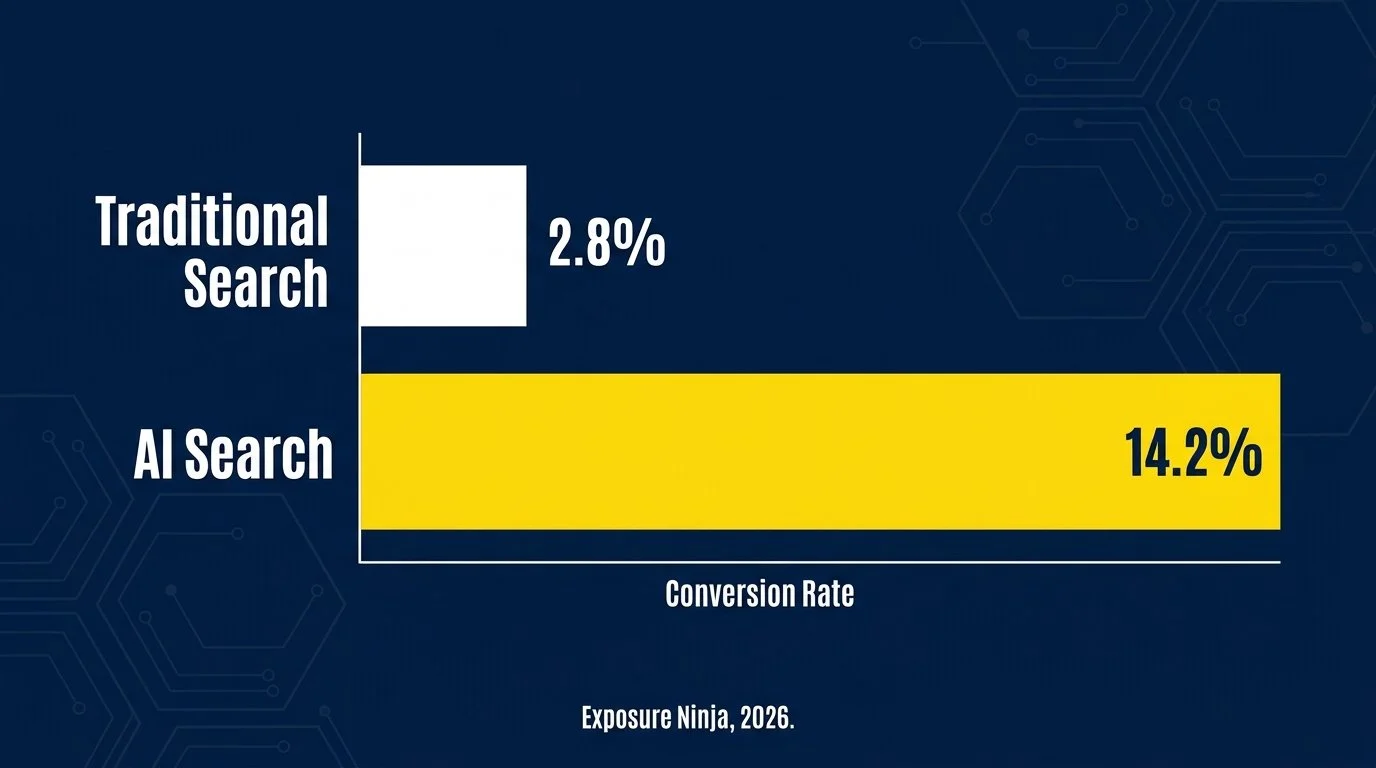
Here's the part that changes the calculation. Washington Post Chief Revenue Officer Karl Wells told Digiday that visitors who do arrive from AI platforms convert to subscriptions at four to five times the rate of traditional search visitors. Exposure Ninja's CMO cheatsheet puts the overall gap even starker, reporting AI search traffic converts at 14.2% versus Google's 2.8%. The traffic you get from AI is smaller in volume, higher in intent, and more likely to close. The traffic you aren't getting represents decisions that were made without you in the room.
That's the actual scoreboard; not clicks, but presence in the answer itself. Similarweb's own guidance puts it plainly; brand mention share, meaning the percentage of relevant AI responses that include your brand, is the new leading metric, and AI platforms are built to synthesize and answer rather than route users to external sites. The referral plateau isn't a failure of AI platforms to deliver traffic, it's the design working as intended.
Myth 2: Domain authority and Google rankings will carry you
This one gets repeated a lot because it's partly true, and partly true is worse than fully wrong because it lets people keep doing what they were already doing.
Yes, domain authority matters. SE Ranking's analysis of 129,000 domains found that sites with over 32,000 referring domains are 3.5 times more likely to be cited by ChatGPT than sites with 200 or fewer referring domains. Third-party signals show up too; domains with millions of brand mentions on Quora and Reddit have roughly four times higher citation chances than those with minimal activity. So far this sounds like SEO with a new coat of paint.
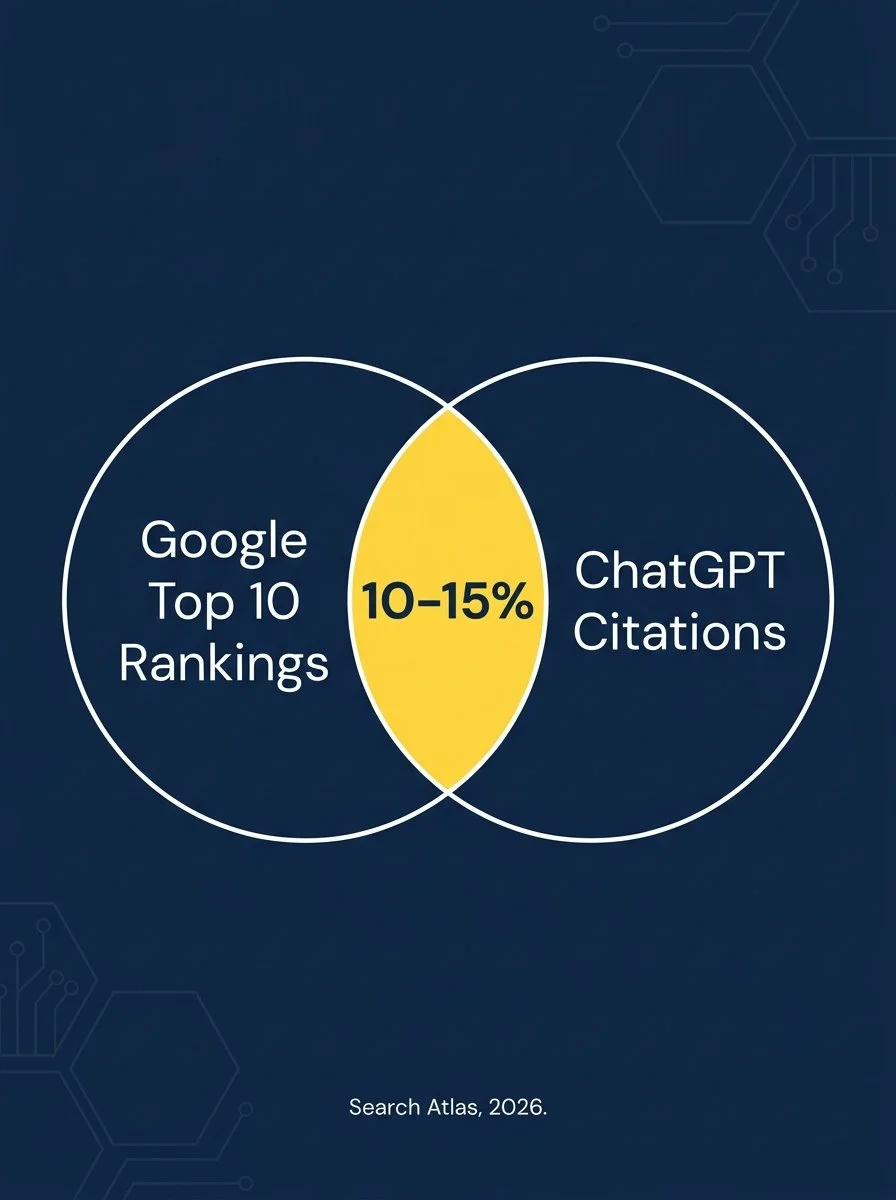
Then the data turns weird. A Search Atlas report found median domain overlap between Google rankings and ChatGPT citations sits around 10 to 15%. BrightEdge, as summarized by Imperative Business Ventures, found that 89% of AI Overview citations come from results ranked beyond position 100 in organic Google results, which means the pages getting cited in AI answers are almost entirely different from the pages winning Google's front page, and your Google rank is roughly uncorrelated with whether an LLM will pull from you.
The reason comes down to how these systems actually operate. ChatGPT's SearchGPT layer pulls from Bing's index, not Google's. Perplexity uses Sonar models tuned for recency. Gemini leans on Google's Knowledge Graph and favors entity density. Each engine is running a different retrieval and citation algorithm, and "high Google authority" is a signal to exactly one of them. If you've been telling leadership that your existing SEO equity will carry you into AI search, the data says it won't carry you nearly as far as you think.
Myth 3: More content at higher volume will win
This one is being actively marketed to marketers by companies selling AI content tooling, which should make everyone suspicious. The pitch leans on Brandi AI research showing brands that produce 12 or more new or optimized pieces of digital content per month achieve up to 200x faster visibility gains than those producing only four. That's a real number, and it's also being weaponized to sell a strategy the rest of the data doesn't support.
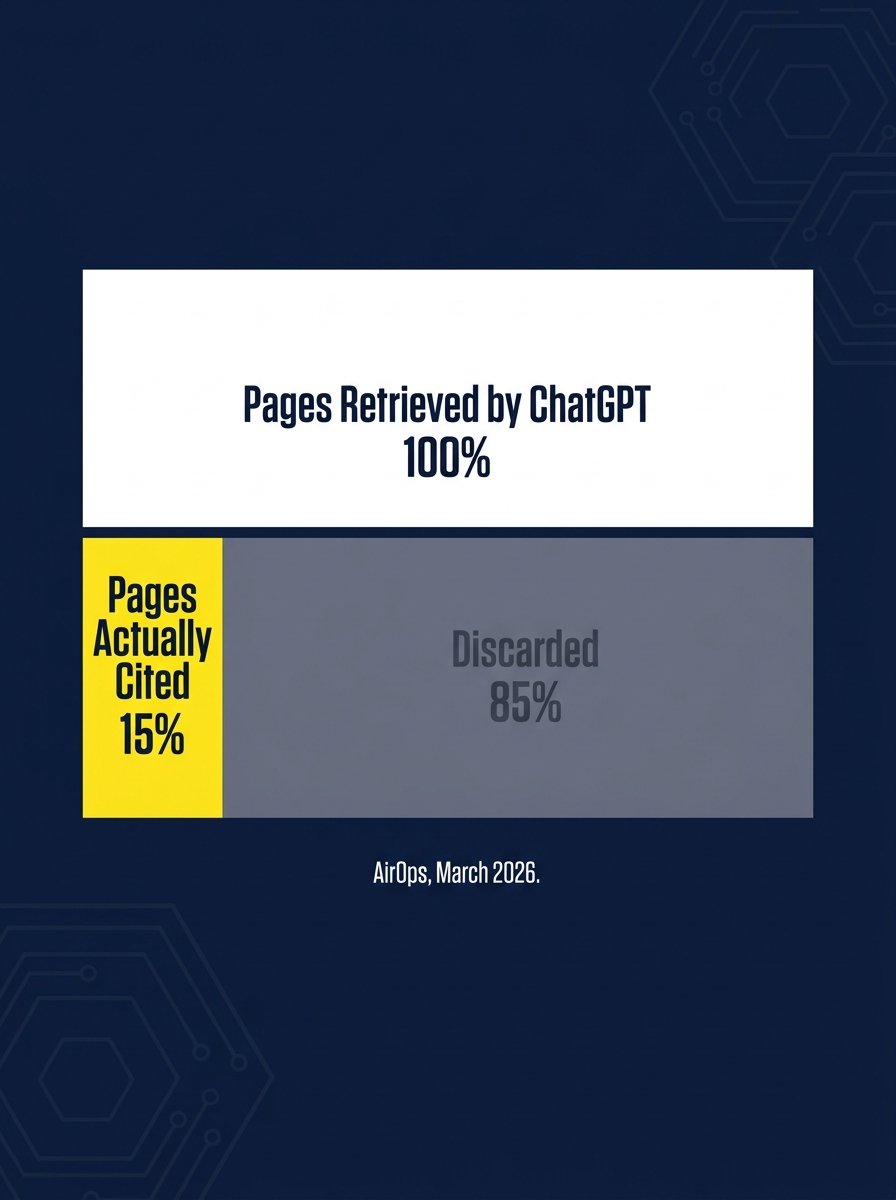
Here's what else happened in early 2026. After OpenAI shipped GPT-5.3 Instant as the default ChatGPT model in March, Resoneo's analysis of 27,000 responses found that the average number of unique domains cited per response dropped from 19 to 15, roughly a 20% decline. The citation surface got smaller, not bigger. AirOps found that ChatGPT only cites 15% of the pages it retrieves; the other 85% are reviewed and discarded. Semrush's April 2026 data shows ChatGPT enables its search feature on just 34.5% of queries, down from 46% in late 2024, meaning most responses lean on training data rather than live retrieval.
Pull those threads together and the picture isn't "more content equals more citations." It's more selective retrieval, smaller citation surfaces, and stronger weighting toward sources the model already trusts. Volume without differentiation just feeds the 85% discard pile. What's actually predicting citation isn't frequency, it's what AirOps identified as structure and substance, comparison pages with three tables earning 25.7% more citations, validation pages with eight list sections earning up to 26.9% more, and early-discovery content with 5 to 7 statistics earning 20% higher citation likelihood. Growth Memo found that 44.2% of all LLM citations come from the first third of a text, which means burying your best content under a warm-up intro is costing you citations you probably don't realize you're losing.
The brands producing 12 pieces a month that are winning aren't winning because of 12. They're winning because 12 is what it takes to produce four or five pieces with real density, structure, and authority per month, on platforms AI systems actually retrieve from. Which leads directly into the fourth thing.
Myth 4: Your website is where the work happens
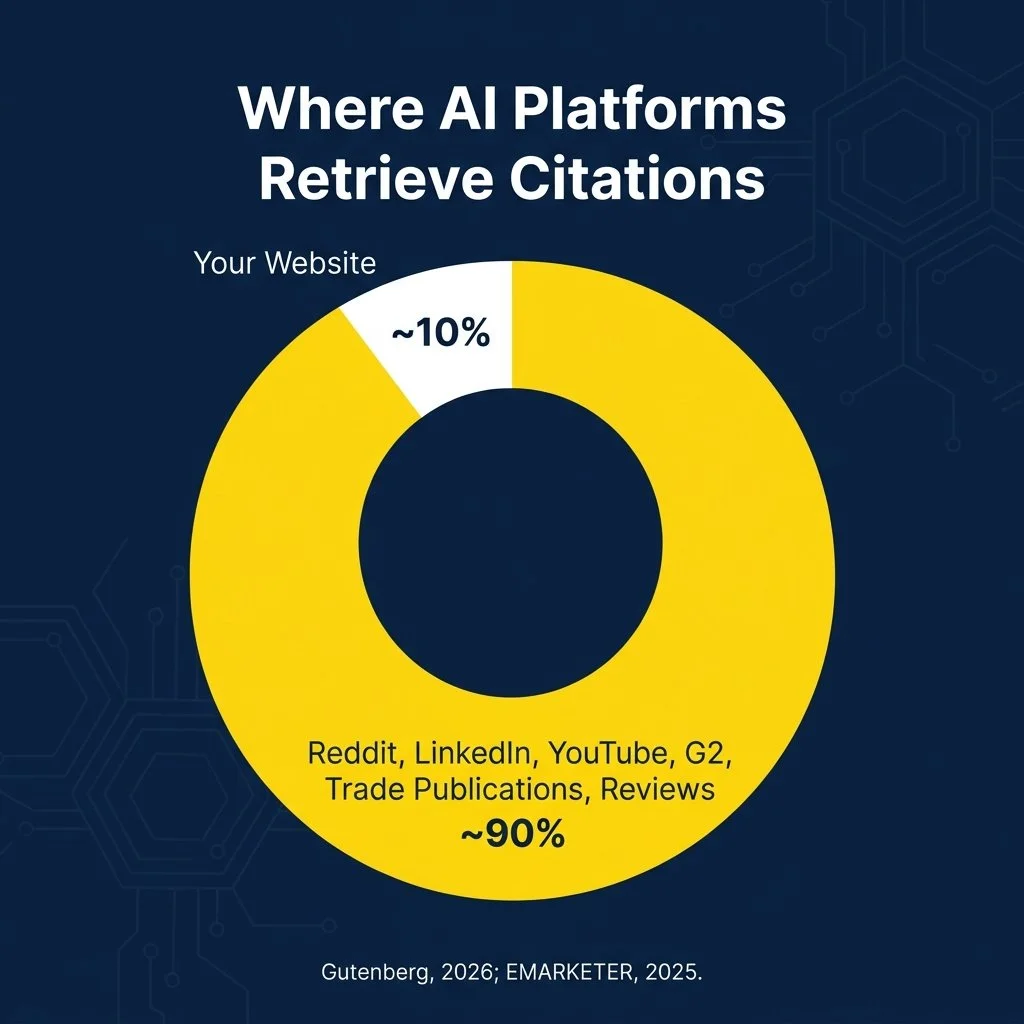
This is the one that trips up teams with strong internal content operations. They build the site, they publish the posts, they implement the schema, and then they're surprised when the AI answers citing their category pull from Reddit threads and G2 reviews instead.
The Gutenberg enterprise AI search guide cites a figure I've seen echoed across multiple reports; roughly 90% of what AI platforms reference comes from outside the brand's own website.EMARKETER reporting shows Reddit, LinkedIn, and YouTube ranking among the most-referenced domains by major LLMs as of late 2025. SE Ranking's analysis found that domains with active Trustpilot, G2, Capterra, Sitejabber, or Yelp profiles have three times higher citation odds in ChatGPT than those without.
And there's a structural advantage sitting right now that not enough people are talking about. Tinuiti and Profound's Q1 2026 AI Citation Trends report shows Amazon actively blocking nearly 50 AI crawlers, including all three of OpenAI's bots, in an effort to keep AI-assisted shopping inside its own ecosystem. Walmart, Target, and Etsy haven't done the same, and Walmart is already seeing approximately 36% of its referral traffic coming from ChatGPT, up from roughly 20% a few months earlier. That's a massive gap opening up because one player decided to wall itself off and competitors decided not to.
The takeaway for anyone who isn't Amazon: your GEO strategy has to extend well beyond your domain, and the effort has to move toward the places AI systems actually retrieve from. That means deliberate presence on Reddit where your category lives, earned citations in trade publications, reviews on the platforms that matter in your sector, and a wire-service mentality toward press releases and data publishing. The playbook is closer to PR and earned media than it is to on-page SEO, but with the ROI calculation completely rewritten because those mentions feed the models that recommend you.
What to do with any of this
Three things are worth doing this quarter if you're running an AEO/GEO program, and none of them require rebuilding your stack.
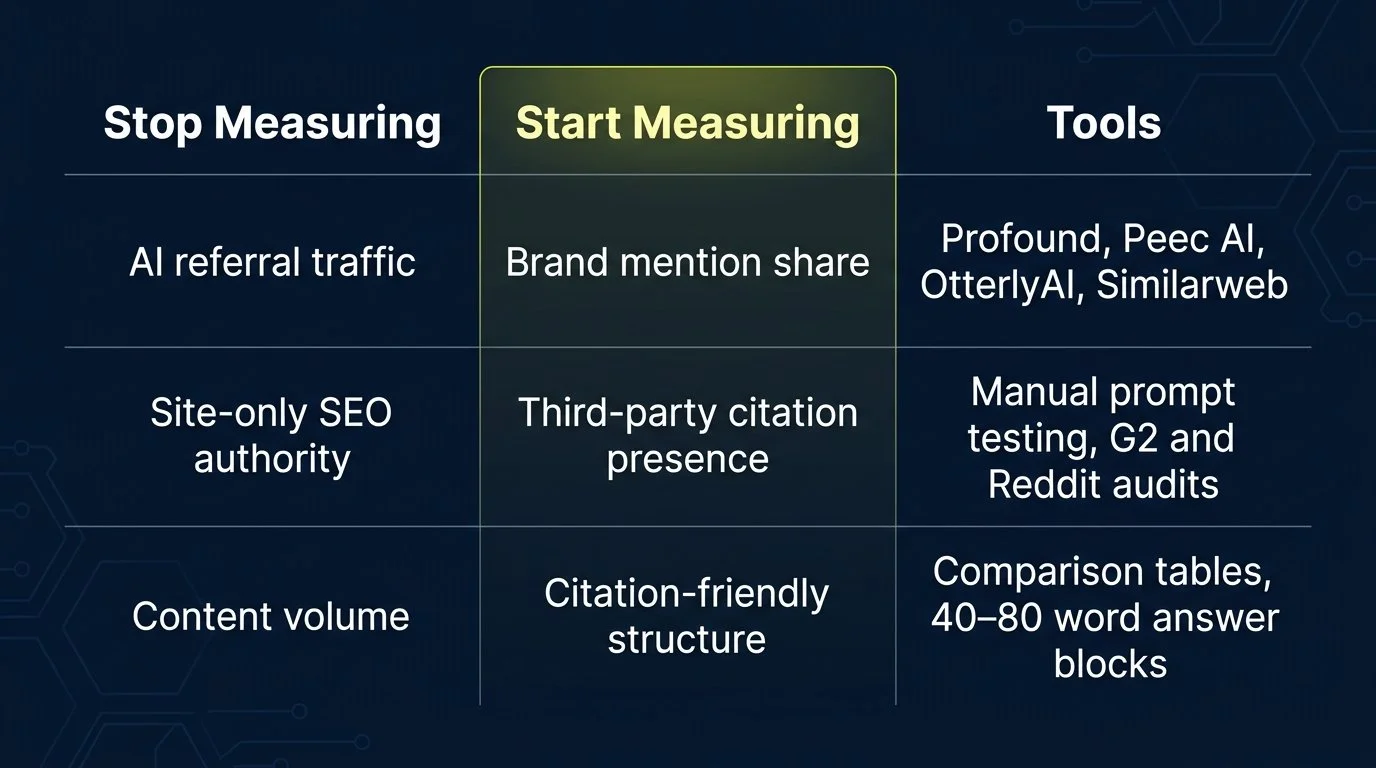
First, change your KPI. Replace AI referral traffic as your top-line AI search metric with brand mention share across the four platforms that matter, ChatGPT, Gemini, Copilot, and Perplexity. Tools like Profound, Peec AI, OtterlyAI, and Similarweb's AI Brand Visibility tracker will do the measurement. Pick one, track weekly against a competitor set, and stop reporting AI success in ways that flatter or punish you for a metric the platforms themselves are deprioritizing.
Second, audit where your category is actually discussed. Run your top 20 buyer prompts through each of the four major platforms yourself, right now. Note who's getting cited and on what sources. If your competitors are showing up via a Reddit thread, a G2 comparison page, or a trade publication you don't have a presence in, that's where the work is. Not on your site.
That exercise is the core of my AI visibility audit, if you'd rather hand it off.
Third, rethink what "a piece of content" needs to be. If 85% of retrieved pages get discarded and 44% of citations come from the first third of whatever does get used, your content has to front-load real answers, real data, real specificity. Three tables and a number-dense intro are doing more for your citation odds than a 3,000-word narrative essay.
None of this is a reason to abandon the content work you've been doing. It's a reason to stop measuring that work against a metric the platforms have already decided they aren't going to feed. The brands showing up in AI answers are shaping the decisions of people who may never visit their websites, and those decisions compound faster than any traffic chart will ever show. Pick the right ruler, and your AEO/GEO program will start looking like what it actually is, which in most cases is doing more than the dashboard admits.
I wrote a whole book on why AI systems recommend some brands and not others, and if there's one thread that runs through it, it's this: visibility in AI search is a function of how explainable your brand is to a machine, not how much traffic it sends you. If you measure the wrong thing, you optimize away from the answer.
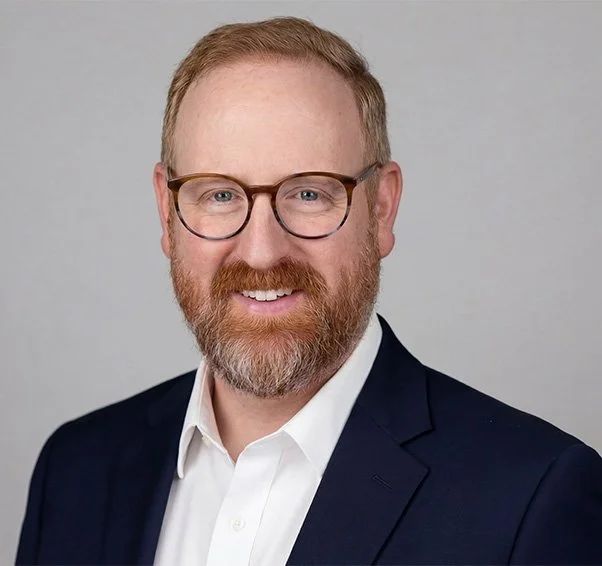
Jarred Smith is the author of Explainable: Why AI Recommends Some Brands & Ignores Others, an Amazon bestseller on AEO, GEO, and SEO. He's a marketing leader with 20 years of experience across healthcare, public media, retail, and environmental services. Find him at jarredsmith.com